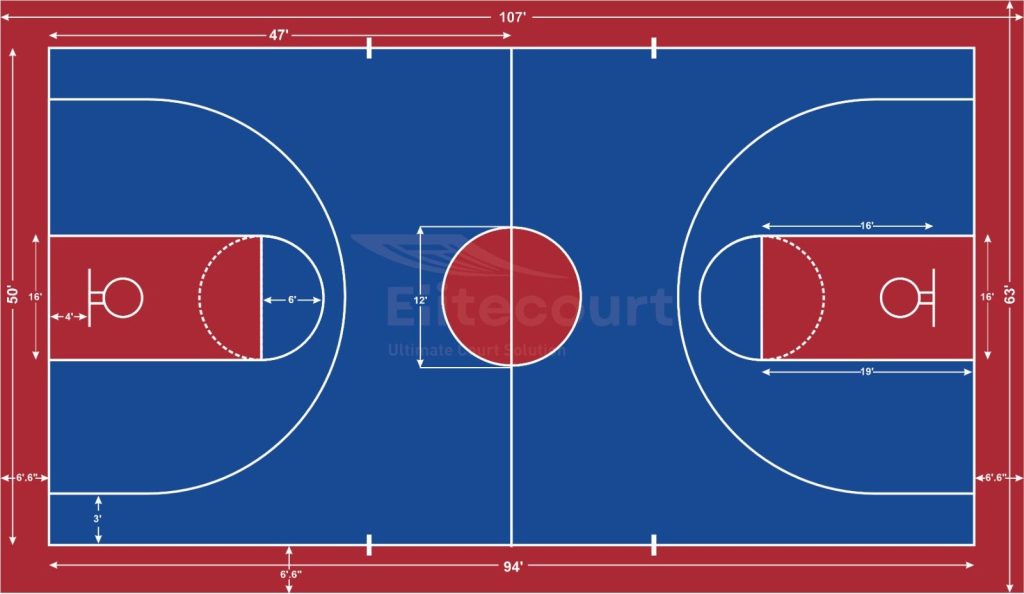
Basketball is one of those sports that looks simple until you actually step onto the court. The bounce of the ball, the grip of your shoes, and even the spacing all play a huge role in performance. Whether you’re planning to build a court or just want to understand the game better, knowing the length of basketball court is more important than most people realize.
Let’s break it down in a friendly and practical way.
Standard Length of a Basketball Court
If you’ve ever watched a professional game, you might assume all courts are the same size—but that’s not entirely true. Different leagues follow slightly different measurements.
For example, in the NBA, the standard court length is 94 feet (28.65 meters), while the width is 50 feet (15.24 meters). On the other hand, international courts (FIBA) are slightly smaller, measuring 28 meters long and 15 meters wide.
Now, why does this matter?
Well, the size directly impacts gameplay. A larger court means more running, wider spacing, and faster transitions. For training or recreational courts, people often adjust dimensions based on available space. However, sticking close to standard measurements ensures a more authentic playing experience.
So if you’re planning a court, always keep the official dimensions in mind—even if you tweak them slightly for convenience.
Why Court Dimensions Matter
Court size isn’t just about fitting players—it affects strategy, stamina, and even injury risk.
A properly sized court allows players to:
- Move freely without overcrowding
- Practice real-game scenarios
- Improve endurance and spacing awareness
Smaller courts may feel easier at first, but they can limit movement and reduce the overall experience. That’s why serious players and coaches always prefer standard or near-standard dimensions.
Types of Basketball Court Flooring Material
Now comes the part many people overlook—the surface itself. The right flooring can completely change how the game feels.
When choosing Basketball Court Flooring Material, the surface is just as important as the dimensions.
Here are the most common options:
1. Wooden Flooring (Hardwood)
This is the gold standard for indoor courts. Most professional arenas use hardwood, usually maple.
Why people love it:
- Excellent grip
- Consistent bounce
- Smooth finish
However, it does require maintenance and is not ideal for outdoor use.
2. Synthetic Flooring
These are modern, versatile surfaces made from materials like PVC or polyurethane.
Benefits include:
- Lower maintenance
- Good shock absorption
- Suitable for both indoor and outdoor setups
This option is becoming increasingly popular for schools and community courts.
3. Acrylic Flooring
Often used for outdoor courts, acrylic surfaces are durable and weather-resistant.
Advantages:
- Long-lasting
- Slip-resistant
- Cost-effective
The bounce might feel slightly different compared to hardwood, but for outdoor play, it’s a solid choice.
4. Rubber Flooring
Rubber courts are commonly used for practice areas and multi-purpose courts.
Why consider rubber:
- Great cushioning (reduces injuries)
- Easy installation
- Budget-friendly
It may not offer the same professional feel, but it’s practical for casual use.
Choosing the Right Flooring for Your Court
Selecting the right flooring depends on a few key factors:
- Location: Indoor courts benefit from hardwood or synthetic flooring, while outdoor courts need weather-resistant materials like acrylic.
- Budget: Hardwood looks amazing but costs more. Synthetic and rubber options are more affordable.
- Usage: Professional play demands high-quality surfaces, but recreational courts can be more flexible.
Think about who will use the court most often. A school court has different needs than a private training facility.
Maintenance and Longevity
No matter which flooring you choose, maintenance plays a huge role in durability.
- Hardwood needs regular polishing and moisture control
- Acrylic surfaces require occasional cleaning
- Synthetic floors are easier to maintain but still need care
A well-maintained court not only lasts longer but also ensures player safety.
Final Thoughts
Building or understanding a basketball court goes beyond just drawing lines on the ground. From the length of basketball court, Basketball Court Flooring Material to the type of surface used, every detail contributes to the overall experience.
If you’re serious about creating a great playing environment, focus on both dimensions and flooring equally. A well-designed court doesn’t just look good—it feels right when you play on it.
And honestly, that’s what basketball is all about.
 Site Title
Leave a comment